I thought your class was overall really enjoyable. There were times where I did fall asleep or just feel bored, but that’s because I have a low enough attention span as is. Things that I didn’t like about your class was it was inconsistent in terms of your lectures. One day you would sound professional and then go on about a story that was fun and enjoyable. I do say that it was a good spice to the meal, it allowed me to stay focused and listen to your funny story while also helping me learn about how to be successful in the big world. Your projects were sometimes fun, I only really had fun with like 2 of them; however, I don’t know if I’ll like the last one or not, presenting was always kind of difficult and when it came to doing it I don’t know if I improved or not. I think if you did some learning how to present or finding a way to help some people it would be a lot better instead of just shoving them onto it. There was that time where a girl almost had an anxiety attack because she was not so familiar with presenting and it was painful to watch. But, to conclude, I really liked your class and I can’t wait to take more in the future, I love your teaching style and even though you were a sarcastic asshat for a lot of it; it was overall really fun to be in. Thank you Mr. Yost for teaching me some of digital media, and I hope you enjoyed reading this shitty write up that I typed in 5 minutes.
Blog Post # 7
Also I found a picture that reminds me of Mr. Yost. If you haven’t guessed yet, it’s the mini games guy from Wind Waker.

Blog Post #6
Is That Fair
1. A student snaps in half a CD-ROM the teacher really needed for her next class. The teacher decides to make a back-up copy of all her crucial disks so it never happens again. This is permissible.
- True, it is for educational use.
2. A technology coordinator installs the one copy of Photoshop the school owns on a central server so students are able to access it from their classroom workstations. This is a violation of copyright law.
2. False, because it belongs to one person and can’t be used by multiple people at the same time.
3. A school has a site license for version 3.3 of a multimedia program. A teacher buys five copies of version 4.0, which is more powerful, and installs them on five workstations in the computer lab. But now when students at these workstations create a project and bring it back to their classrooms, the computers (running 3.3) won’t read the work! To end the chaos, it’s permissible to install 4.0 on all machines.
3. False, because there are only 5 legal copies therefore, can’t be shared by other computers.
4. The state mandates technology proficiency for all high school students but adds no money to schools’ software budgets. To ensure equity, public schools are allowed to buy what software they can afford and copy the rest.
4. True, this is for educational use which makes it fair use.
5. A geography teacher has more students and computers than software. He uses a CD burner to make several copies of a copyright interactive CD-ROM so each student can use an individual copy in class. This is fair use.
5. False, this is not fair use because only the computers that have the software on it are allowed to use it. Looks like some students are going to have to do a thing called waiting.
6. A middle school science class studying ocean ecosystems must gather material for multimedia projects. The teacher downloads pictures and information on marine life from various commercial and noncommercial sites to store in a folder for students to access. This is fair use.
6. True. As long as it stays only on school grounds for an educational use, and isn’t going back up on the web, it is permissible
7. An elementary school designs a password-protected Web site for families and faculty only. It’s OK for teachers to post student work there, even when it uses copyright material without permission.
7. True. It is for school purposes and is protected, which means that it is not for public use.
8. A student film buff downloads a new release from a Taiwanese Web site to use for a humanities project. As long as the student gives credit to the sites from which he’s downloaded material, this is covered under fair use.
8. False. This is because it’s removing material from a website deeming it copyright infringement.
9. A technology coordinator downloads audio clips from MP3.com to integrate into a curriculum project. This is fair use.
9. True, the audio clips are legitimately made and they have their own archive.
10. A teacher gets clip art and music from popular file-sharing sites, then creates a lesson plan and posts it on the school Web site to share with other teachers. This is permissible.
10. False. Even though it’s for educational use, it is still being shared which means it’s still being redistributed.
11. A teacher videotapes a rerun of Frontier House, the PBS reality show that profiles three modern families living as homesteaders from the 1880s did. In class, students edit themselves “into” the frontier and make fun of the spoiled family from California. This is fair use.
11. True, it is used for educational use and isn’t spread throughout the web.
12. A student tries to digitize the shower scene from a rented copy of Psycho into a “History of Horror” report. Her computer won’t do it. The movie happens to be on an NBC station that week, so the teacher tapes it and then digitizes it on the computer for her. This is fair use.
12. True. This is for educational use and is still in an education institute.
13. A history class videotapes a Holocaust survivor who lives in the community. The students digitally compress the interview, and, with the interviewee’s permission, post it on the Web. Another school discovers the interview online and uses it in their History Day project. This is fair use.
13. True. The school implies the whole school which is used for educational use.
14. On Back-to-School night, an elementary school offers child care for students’ younger siblings. They put the kids in the library and show them Disney DVDs bought by the PTA. This is permissible.
14. False because Disney still owns the rights to the movie and it’s being shared without their permission.
15. A teacher makes a compilation of movie clips from various VHS tapes to use in his classroom as lesson starters. This is covered under fair use.
15. True, because he’s using just clips from the tapes in his classroom.
16. At a local electronics show, a teacher buys a machine that defeats the copy protection on DVDs, CD-ROMs, and just about everything else. She lets her students use it so they can incorporate clips from rented DVDs into their film genre projects. This is fair use.
16. True. It is for educational use and only that.
17. A number of students take digital pictures of local streets and businesses for their Web projects. These are permissible to post online.
17. True. This is public domain and no one owns the streets. For some businesses, they may find it copyright depending on where the picture was taken.
18. A student wants to play a clip of ethnic music to represent her family’s country of origin. Her teacher has a mp3 that meets her needs. It is fair use for the student to copy and use the music in her project.
18. False, because it’s not royalty free music therefore very not okay to use.
19. A high school video class produces a DVD yearbook that includes the year’s top ten music hits as background music. This is fair use.
19. False. Even if it’s background, and that means it still contains the music.
20. Last year, a school’s science fair multimedia presentation was so popular everyone wanted a copy of it. Everything in it was copied under fair use guidelines. It’s permissible for the school to sell copies to recover the costs of reproduction.
20. False, the school is distributing copies with full anticipation of doing so.
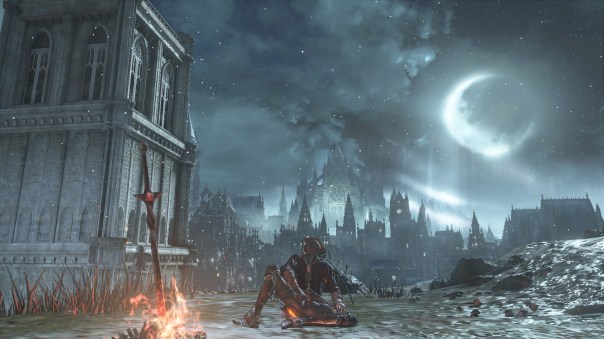
I haven’t posted any game related pictures on here yet, so here’s a lovely photo I took in Dark Souls III
Understanding Social Media Consumption
Domics, a YouTube celebrity has over 6 million subscribers. https://www.youtube.com/user/D0MICS/videos
He is commonly known for his animation videos and a lot of the videos he makes attract mainly younger audiences. (young adults, teens, children) His videos usually consist of a topic that is relatable such as, dating, neighbors, school, etc. https://www.youtube.com/watch?v=O6sS0qljJFI This is the kind of content that I really like about him. Not only does he make some good points in them but he also animates it to make it more enjoyable for the viewer.
There are some videos where it’s him doing a “watch along” where he is sponsored by a certain website such as Crunchyroll to watch a TV series with his viewers. https://www.youtube.com/watch?v=L1ze7XhdNtY I think that this is the thing I dislike from his content, it’s not that it doesn’t belong there but just something that I was never fond of.
At the end of every video he always talks about his sponsors and wanting to go support them. He didn’t use to be sponsored by anyone and did it for fun, but because he needs to make a living, I can see why he would do that. Overall, his content and humor is the same, the only thing different is the animation quality is way better due to him actually making a living off sponsorships and YouTube views.
The only thing I dislike about his content now is that it has an awkward upload schedule. He tends to upload 2-3 videos a month but they’re not in set upload time. In one of his early videos he talked about his equipment for animating and since I have no experience with animation it is really useful for more general uses such as using Audacity to make the sound way more clear than it is. https://www.youtube.com/watch?v=FrGAZcWDtMY
My Personal Career Path
The career I’m pursuing is to become a video editor working from my home or at an office, and the reason I want to be that, would be because of my experience with the software and time put into it. I loved piecing together clips and turning it into a video that makes people laughter or happy. The feeling of having people feel those emotions for something that I worked hard for is more of a reward itself.
The working conditions for being a video editor are really interesting. Video editors have irregular hours or weird deadlines to meet, and a video editor that doesn’t work at home would work in an office for about forty or more hours. They also work very precisely and need things to be done in a specific way that way it reduces the amount of difficult errors to correct. The thing that really catches my interest is that they often result to working with their coworkers and asking them questions instead of supervisors. Working from home would be a different thing, it would require me to rely on commissions or be a video editor for a Youtube celebrity. It would also require me to spend probably more time than a normal video editor depending on the requirements the commissioner is providing.
Video editors usually work in an office. I would prefer to work at home but I don’t know if that would be possible. Honestly speaking, if I become a video editor I won’t be upset about not working at home anyways.
For training required all I would need is a bachelors degree but if I wanted to get paid more and have further training, going for master’s doesn’t sound too bad for getting.
On average a video editor $45,512 yearly with a range of $30k ~ $76k. Depending on the training that is required, bonuses, profit sharing, and commissions would only add more.
There’s a lot of other relatable jobs such Audio Editor, News Editor, Media Editor, VFX Editor, and many more. They all sort of associate and require knowledge of editing software, However I prefer video editing just because it’s something I have more experience in.
It is possible to advance on this job and get a promotion such as, a video producer or creative director. After 10-20 years of training video editor salaries increase by approximately $11k.
A lot of people rely on video editors to do their work, depending on which field or what the commission is. If it were an animation it would be up to the video editors to put together all the clips into a perfect video/movie. In Texas, it’s basically the same except a lot lesser. This is because Texas has a terrible and not so popular cinematography area. However in other states such as a lot of the west coast, they have a pretty popular film industry for example Hollywood.
This occupation does require travel if you were to work in an office. Other than going from home to work, nothing really major such as travelling internationally. Moving studios or offices is a way for travel as well, however it’s not usually required.
Being a video editor means it does come with flexible work schedules, but that’s only if the deadline is met. As long as one is able to maintain their amount of hours per week and work efficiently, then having a flexible schedule is doable. Remember that working with your coworkers to produce a final product is important therefor if someone is lacking on their job it slows the progress down for every other coworker as well.
Sources:
What I Hope to Learn
I took this class thinking it would enhance my abilities and knowledge. I took a class during my senior year of high school that improved upon my social skills to help me get a job in real life. I may not have much experience with a lot of the things required such as WordPress and I would like to know more about Digital Media as a whole. Over the course of my time in this class, I would like to know more about becoming successful into more of the real world and have a general understanding of how the real world works. With this information, I am opened to a wider range of possibilities for my career as well as know how a blog works.
 CrimsonMan